Abhibus vs FlixBus: Which is Cheaper for Intercity Travel in India? (2026 Guide)

Budget intercity bus travel in India has rapidly grown high in recent years, driven by rising fuel costs, improved highway infrastructure, and increasing demand for affordable alternatives to trains and flights. In this generation the travelers are more informed and selective. And often comparing all major factors such as ticket price, onboard comfort, safety standards, and route availability and calculating the overall experience before booking their journey. Some popular platforms like Abhibus and Flixbus have emerged as the best options for intercity travel. Abhibus integrates as a bus ticket booking service, allowing users to compare multiple bus timings, operators, and fare options in one place. Also, you visit the latest coupons for Abhibus and amazing Flixbus deals to save more on your traveling.
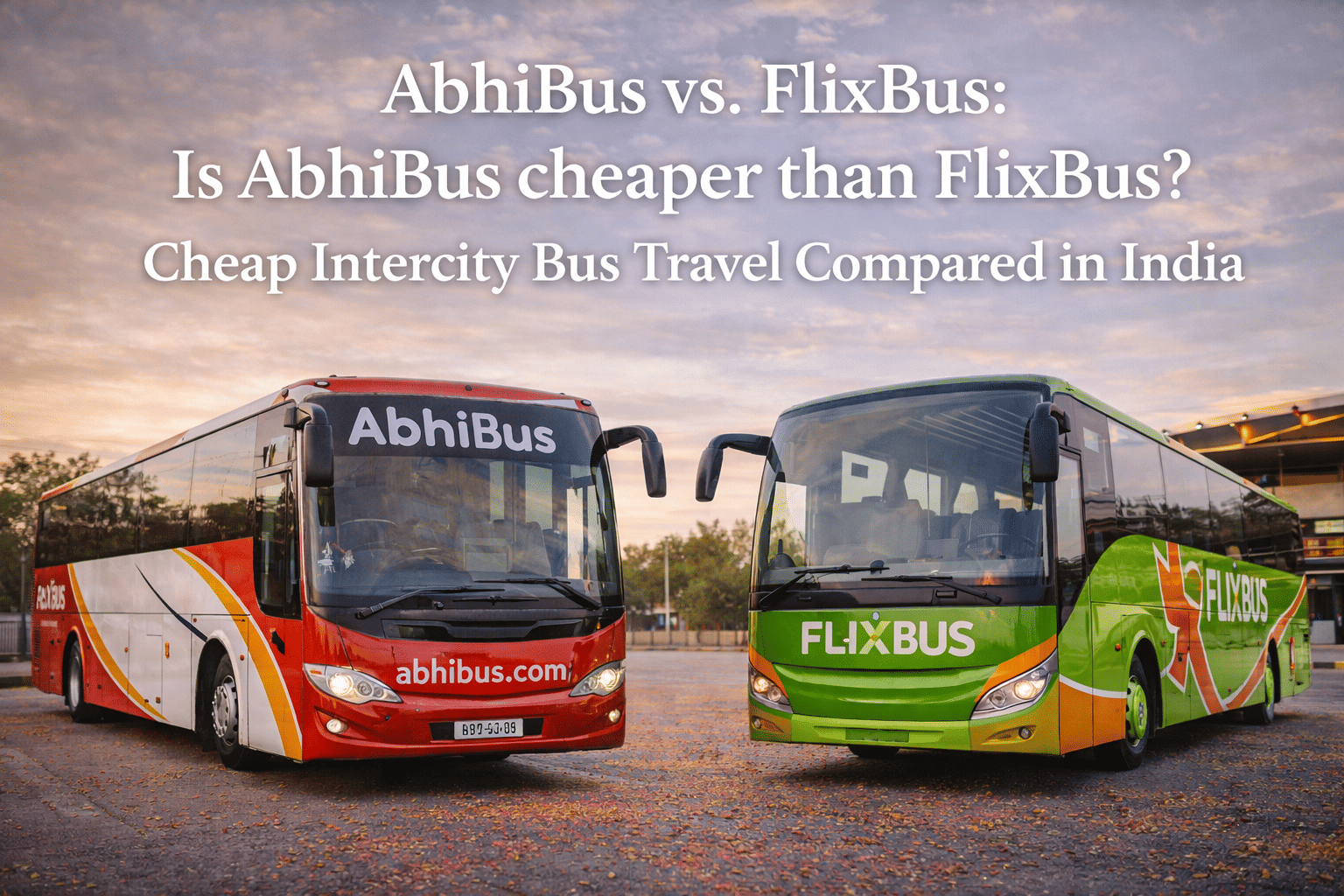
Quick Comparison: Abhibus vs FlixBus
Features | Abhibus | Flixbus |
Business model | Bus ticket booking platform | Bus operator |
Route coverage | Extensive across indian cities & towns | Limited but going metro-to-metro routes |
Pricing range | ₹300-₹2000 | ₹199-₹1500 |
Bus types | Ac, sleeper, volvo | Standardize modern coaches |
Booking platform | App & website | App & website |
Cancellation policy | Depends on the operator. | Brand-controlled, clear policy |
Ideal for | Flexible route option | Predictable comfort & budget travel |
How do these features help you find the best one? Abhibus vs. Flixbus
Platform overview and business model:
Abhibus: Abhibus operates as a bus ticket booking service platform, meaning it does not own or operate the buses directly. But it has many tie-up partners with 2500+ private and government bus operators across India and helps users to compare the scheduled prices with different bus types on a single platform. The service of the Abhibus covers the 3500 routes connecting 300 cities, including metro cities. But the actual travel depends on the experience of the individual operator selected. Abhibus is focusing on scale and accessibility rather than service delivery and making it more suitable for the users who prioritize routes and availability.
Flixbus: Flixbus follows the direct route operations with brand-led models where it controls the service standard operations to licensed local partners. Flixbus manages pricing schedules and onboard overall experiences. And it operates in 40+ countries and serves over 2500+ destinations, carrying more than 80 million passengers annually. In India its network is still developing and is focused on high-demand intercity corridors, primarily between major metros and business hubs. The company uses a dynamic pricing model, similar to airlines, where fares start low and increase based on demand and seat availability.
Route Coverage & Network Reach:
Abhibus: offers one of the widest network reaches in India’s bus travel space by aggregating routes from major cities and state operators through partnerships with 17 state road transport corporations such as GSRTC (Gujarat), BSRTC (Bihar), RSRTC (Rajasthan), HRTC (Himachal Pradesh), and newer additions like TSRTC (Telangana) and KSRTC (Kerala). Abhibus enables bookings across intercity and interstate corridors covering hundreds of cities and towns across northern, southern, eastern, and western India.
Flixbus: Its reach in India is more focused and strategically expanding, and it launched in 2024 and has grown its international operators to 50+ cities with around 29 routes across regions and connecting markets like Delhi, Gwalior, Indore, Ujjain, and other high-demand intercity corridors. FlixBus primarily targets major city-to-city travel rather than extensive rural coverage, offering a growing but more concentrated network compared with large aggregators.
Pricing & Ticket Affordability:
Abhibus pricing structure: Abhibus aggregates the fare from a large network of operators, which means tickets can vary from route to route. Budget seats are mostly available for the short routes and often start at very low prices. Prices depend on factors such as specific bus operators and the distance between origin and destination. Seasonal fluctuations and festival demand can also affect fare levels, with operators adjusting prices during peak travel periods.
Flixbus: Flixbus generally follows a dynamic where prices start low and increase closer to departure or seat inventory. On longer routes ticket pricing has been observed as starting at ₹199-₹299; for some journeys actual routes are getting costly and vary from route to route. Booking earlier during the off-peak season can often secure low fares, while last-minute travel may cost more. FlixBus sometimes offers promotional deals and discount codes that reduce ticket prices.
Comfort, Amenities & Travel Experience:
Abhibus: Abhibus is a ticket booking platform rather than a bus operator through which the travelers receive the onboard comfort & amenities largely based on the specific bus operator chosen during the time of booking. Most of the routes that are booked from AbhiBus may include vehicles ranging from non-AC to Volvo or luxury coaches, along with reclining seats, charging points, blankets, and restroom facilities. This special variability gives users a choice, but it also gives them a different travel experience from one booking to the next.
Flixbus: Flixbus operates with a more standardized approach to comfort and amenities because it controls service delivery and brand standards across the networks. Flixbus typically includes air conditioning, onboard wifi, luggage space, and charging stations, providing a level of comfort across most routes. Although specific amenities can vary slightly by region or partner operator, FlixBus prioritizes uniformity so passengers generally know what to expect before boarding.
Booking Experience & App Usability:
Abhibus: Abhibus provides users with a comprehensive booking experience that is especially designed for flexibility or comfort. Its website and mobile app include multiple filters such as departure time, bus type, and fare range. The platform also displays operator ratings and user reviews, which can help travelers make more informed choices.
Flixbus: FlixBus’s booking experience is designed with simplicity and speed in mind. The platform’s app and website focus on a clean, streamlined flow where users select their origin, destination, and date, then view available services with clear fare breakdowns. Because FlixBus controls its own routes and services, which helps users to make decisions faster for travelers who prefer comfort and simplicity over choice.
Which One Should You Choose?
Abhibus:
- You need wider route coverage among the several cities and routes, which covers the traveling between towns and smaller regional destinations.
- You prefer to compare prices, operators, and bus types before booking rather than selecting a single platform ticket.
- You are comfortable with several comfort levels depending on the bus type and its operator.
- You should choose Abhibus if you prefer flexibility and choice and having a simple travel experience.
Flixbus:
- You preferred standard onboard with similar seating and the best service quality across different routes.
- You mainly travel between major cities or high-demand intercity corridors.
- You value predictability and consistency, knowing what to expect before boarding.
- You want a simple booking process with fewer options and faster decision-making.
- You are booking in advance and want stable service standards rather than operator comparisons.
FAQs:
Q. Is Abhibus cheaper than FlixBus?
A. Prices vary by route and timing, as Abhibus depends on operators while FlixBus uses dynamic pricing.
Q. Which option offers more route choices?
A. Abhibus generally offers wider route coverage due to partnerships with many operators.
Q. Are cancellation policies the same on both platforms?
A. Abhibus policies depend on the bus operator, while FlixBus follows centralized rules.
Q. Which is better for overnight bus travel?
A. Abhibus offers more sleeper options, while FlixBus focuses on uniform seating layouts.